
Why the Philippine Juvenile Justice System is Failing and How to Fix It
Crisis of the Innocents
THE EDITORIAL CHEESE
Patrick Petinglay Villavert
6/26/20265 min read
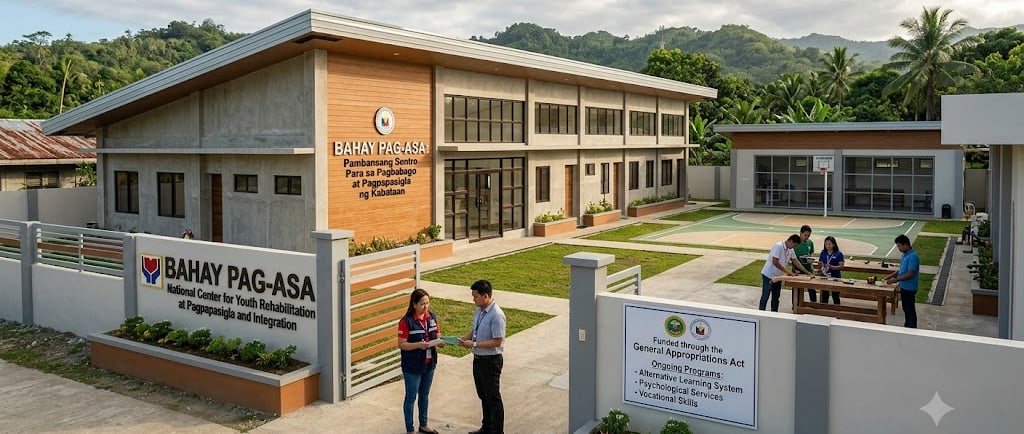
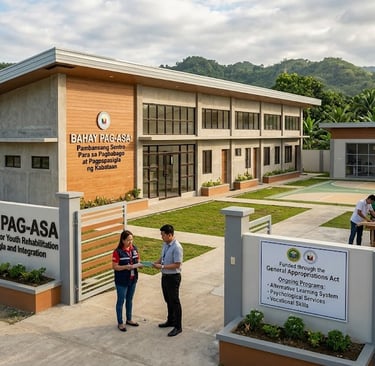
The passage of Republic Act No. 9344, or the Juvenile Justice and Welfare Act of 2006, was hailed as a landmark triumph for human rights in Southeast Asia. Grounded in the principle of parens patriae (the state as the ultimate guardian of the child) and aligned with the United Nations Convention on the Rights of the Child, the law shifted the state's approach toward Children in Conflict with the Law (CICL) from a punitive, adult-centric criminal process to a restorative, rehabilitation-first framework.
Yet, twenty years after its enactment, a profound gulf persists between the progressive letter of the law and the grim reality on the ground. The system is structurally fractured. While populists routinely clamor to fix youth crime by simply lowering the age of criminal responsibility—a lazy, punitive reflex—the real failure lies in a broken implementation mechanism, unfunded mandates, and institutional neglect.
To salvage the system, the Philippines does not need to become more punitive; it needs to become structural, accountable, and fully funded.
Part I: The Core Failures of the Current System
The breakdown of the Philippine juvenile justice system can be traced to structural, financial, and institutional design flaws within RA 9344 and its amendment, RA 10630.
1. The LGU Funding Bottleneck and Devolved Failure
The fatal flaw of RA 9344 was the devolution of the mandate to construct and operate Bahay Pag-asa (BPA) centers to Local Government Units (LGUs). Under the law, every province and highly urbanized city is required to build and maintain a 24-hour child-caring institution.
This created an immediate equity crisis:
High-income, Class-1 cities possess the Internal Revenue Allotment (IRA)—now National Tax Allotment (NTA)—to fund such facilities.
Struggling 3rd to 5th-class municipalities and underfunded provinces simply cannot afford the millions of pesos required for specialized infrastructure, continuous utilities, food, and security.
As a result, out of the roughly 150 centers needed nationwide, only a little over a hundred exist, leaving vast swathes of the country with absolutely no specialized youth facilities.
2. "Jails in Disguise" and Human Rights Substandardization
Where Bahay Pag-asa facilities do exist, many have degenerated into what the Commission on Human Rights (CHR) and child rights advocates openly call "jails in disguise."
Because LGUs frequently lack the architectural guidance, budget, or political will to build therapeutic environments, they construct facilities using standard penal templates. Children are routinely subjected to:
Iron-barred concrete cells locked from the outside.
Severe overcrowding and poor sanitation.
A total absence of operational educational programs (such as the Alternative Learning System) and mental health care.
Punitive, restrictive visitation policies that sever crucial familial bonds necessary for rehabilitation.
3. The Chronic Deficit of Specialized Human Capital
A restorative juvenile justice framework is entirely dependent on specialized human capital. The law mandates that each BPA be staffed by a multi-disciplinary team: social workers, psychologists, guidance counselors, and medical personnel.
However, the public sector faces a severe, systemic shortage of registered social workers and mental health professionals. Local social workers are notoriously overworked, forced to manage hundreds of general welfare and poverty-alleviation cases simultaneously. Consequently, individualized intervention plans for CICL are either superficial or entirely non-existent.
4. Police and Barangay-Level Violations of Protocol
The first hours of apprehension are critical. While RA 9344 explicitly bans the use of adult jails, standard handcuffs (unless absolutely necessary), and aggressive interrogation techniques, first responders—specifically local police officers and barangay tanods—frequently lack continuous, institutional training. CICL are still regularly exposed to standard adult booking procedures, identity exposure, and, in worst-case scenarios, physical abuse during custody transitions.
Part II: Legislative Remedies and Amendments Needed
Fixing the juvenile justice system requires surgical legislative amendments to strip away the structural roadblocks embedded in the current laws.
1. Centralizing the Budget: Stripping LGUs of Fiscal Responsibility
The national government must stop treating youth rehabilitation as a local luxury. Congress must amend RA 10630 to completely centralize the funding, construction, and operation of all Bahay Pag-asa facilities under the national budget of the Department of Social Welfare and Development (DSWD), rather than relying on LGU allocations.
Nationalization of Personnel: All staff working in these facilities should be national DSWD employees, ensuring standardized competitive salaries, proper qualifications, and freedom from local political patronage.
Earmarked Line Item: The annual General Appropriations Act (GAA) must feature a distinct, non-compromisable line item dedicated solely to the operations, maintenance, and structural upkeep of the national Bahay Pag-asa network.
2. Legal Penalties for Non-Compliant Local Officials
Currently, local chief executives face little to no accountability for failing to protect minors or fund local juvenile justice councils. The law must be amended to introduce strict administrative and criminal penalties for local officials who fail to establish functional Local Councils for the Protection of Children (LCPC) or who allow substandard conditions to persist in local holding centers. The Department of the Interior and Local Government (DILG) must tie these metrics directly to the highly coveted Seal of Good Local Governance.
3. Institutionalizing the "Therapeutic Residential Model" by Law
Congress must legally redefine the structural specifications of youth facilities to permanently outlaw prison-style architecture. Amendments must mandate that any facility housing minors adhere to a strict Therapeutic Residential Model. The law should explicitly ban:
Fixed iron cell bars in sleeping quarters.
The use of penal confinement terms (e.g., changing "cells" to "dorms" or "cabins").
The lack of open green spaces or vocational workshops.
Facilities that violate these architectural and therapeutic standards should be stripped of their DSWD accreditation, triggering immediate administrative restructuring.
Part III: Non-Legislative and Holistic Approaches
Lawmaking alone cannot heal a broken system; execution, community integration, and operational shifts are equally paramount.
1. Mandatory Diversion and Community-Based Restorative Justice
The courts and prosecutors must aggressively maximize Diversion Programs before a child ever sees the inside of an institution. For minor and non-violent offenses, the barangay level must be heavily equipped to execute community service, family counseling, and restitution agreements.
If a minor is integrated into a structured, localized program, the stigma of institutionalization is avoided, and the state saves valuable resources for handling serious, violent cases within the Intensive Juvenile Intervention and Support Center (IJISC) framework.
2. Upgrading the Barangay Council for the Protection of Children (BCPC)
The true frontline of juvenile defense is the barangay. The BCPC must be transformed from a paper-only entity into an active community watchdog.
Data-Driven Intervention: BCPCs must maintain localized registries of "Children at Risk" (CAR)—those suffering from extreme poverty, parental abandonment, or substance abuse exposure.
Proactive Protection: By intervening through local youth sports, community-based values formations, and feeding programs before a crime occurs, the influx of minors into the formal justice system can be dramatically curbed.
3. Comprehensive Private-Sector and NGO Partnerships
The state does not have to carry the operational burden alone. The DSWD should actively expand public-private partnerships, licensing established, well-funded non-governmental organizations (NGOs) and religious institutions to run accredited child-caring facilities. Furthermore, corporate social responsibility (CSR) programs can be legally incentivized to fund vocational and alternative learning programs within the Bahay Pag-asa network, ensuring that when a child turns 18, they leave with a high school equivalency diploma and viable, marketable job skills.
In Summary
The ongoing political obsession with lowering the age of criminal responsibility in the Philippines is a dangerous smoke screen. It attempts to punish children for the systemic failures of the state.
The breakdown of the juvenile justice system is not a failure of leniency; it is a failure of logistics, funding, and accountability. By shifting financial responsibility to the national government, professionalizing youth center administration, enforcing strict therapeutic standards, and fortifying community-level prevention, the Philippines can finally realize the true spirit of RA 9344. Only then can the state transform its juvenile justice framework from a conveyor belt of systemic trauma into a genuine sanctuary for rehabilitation and hope.